

Who does the Qur’an address first on the subject of hijab? Most people assume that it must proclaim something about forcing women to dress a certain way. This view is, in one word, wrong.
It is a common misconception that women bear the primary responsibility to observe hijab. But few people realize that on this question of hijab, the Qur’an does not address women first. It addresses men first. And the Qur’an does not compel hijab on women, but it does so on men. That’s not a typo. Islam places the primary responsibility of observing hijab not on women — but on men. It is critical we understand this point.
Moreover, people often conflate “hijab” and “headscarf”. Wearing the headscarf is one form of hijab, but hijab is so much more. In this short article I clarify what hijab is, is not, and why it is such an important Islamic teaching in general.
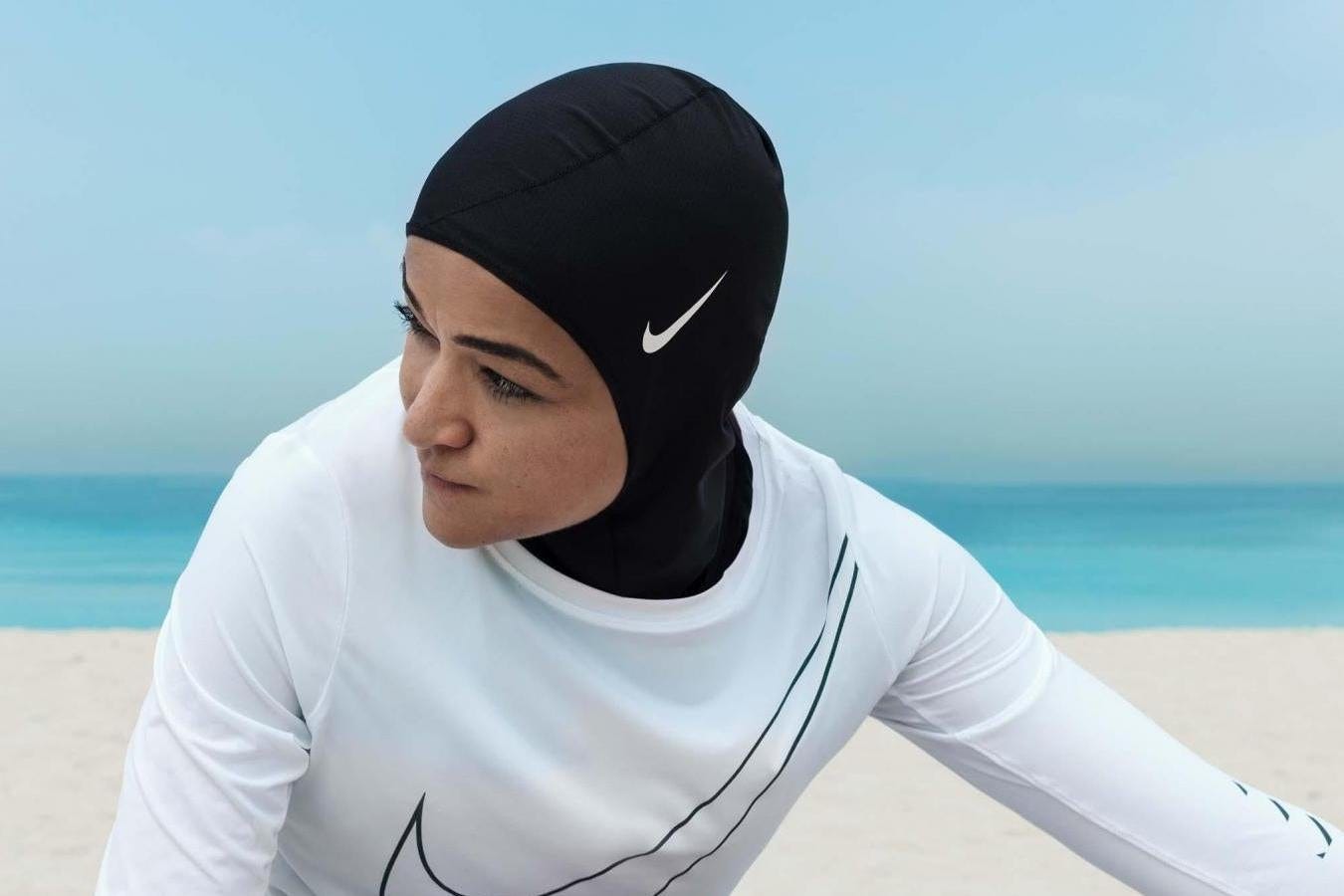
What is Hijab?
At the genesis of the hijab discussion, the Quran commands men to not stare at women and to observe modesty in their actions. The Quran 24:31 obliges men to observe modesty in clear terms: “Say to the believing men that they restrain their eyes and guard their private parts. That is purer for them. Surely, Allah is well aware of what they do.”
This verse rebukes forced laws on women that claim “women must cover otherwise men are distracted”. It destroys rape culture because it commands men to reform themselves first and exclusively. It demolishes complaints that what a woman is wearing is “too provocative”, whatever that means, because it flat out forbids men from gawking at women.
In Islam, men have an obligation to God and to women to observe hijab. I imagine a conversation between someone teaching the Quran and a guy as follows:
Teacher: Don’t stare at women.
Guy: But she’s wearing revealing clothing!
Teacher: Why are you staring? Stop.
Guy: But it’s revealing.
Teacher: Why-are-you-staring?
Guy: …
It’s that simple. If a guy chooses to accept Islam, Islam says he must observe hijab.
The Prophet Muhammad’s Example
The Prophet Muhammad’s (sa) directives further affirm this view. He admonished men, “Be chaste yourselves, and women will be chaste as well,” again putting the primary burden of hijab on men.
This point was again illustrated when the Prophet (sa) rode with his companion Al Fadl bin Abbas. A woman described as strikingly beautiful approached the Prophet to seek his guidance on some religious matters. Al Fadl began to stare at her because of her beauty.
Noting this, the Prophet Muhammad (sa) did not scold the woman for revealing her beauty or for dressing immodestly. Instead, the Prophet (sa) “reached his hand backwards, catching Al Fadl’s chin, and turned his face to the other side so that he would not gaze at her”. Thus, the Prophet Muhammad (sa) once more established that the primary burden to observe hijab rests on men—precisely as the Qur’an instructs.
The Quran and Prophet Muhammad (sa) both keep men accountable. Only after the Quran thoroughly commands men to observe hijab by being modest, not staring at women, and reforming ourselves as a commitment to humanity and to God, does the Quran address women. In doing so, the Qur’an also admonishes women to dress modestly as a covenant between them and God. Let me reiterate this point. When the Qur’an holds men accountable to humanity to observe hijab, it does not place that burden on women, holding them accountable only to God. Thus, no man has any right to compel hijab upon a woman, much less judge her in any capacity.
As His Holiness, the Khalifa of Islam Mirza Masroor Ahmad, reminds men who force hijab on women: stop and restrain yourselves instead. He admonished men:
Men should remember that they have not been given powers to police others and they should restrain themselves. It is not for them to cover the heads of women from outside. Men are commanded to restrain their eyes, they should fulfill their own obligations. There is not even any commandment to forcibly cover the heads of Muslim women, let alone non-Muslim women. It is men like these who have hardline ideas…
And the model figure that God presents to Muslim women is none other than Mary Mother of Jesus (as), whom the Qur’an refers to the greatest of women due to her righteousness and trust in God. This is who the Qur’an presents to Muslim women—a single mother who was fearless, courageous, unrelenting in her trust in God, and resolute in her commitment to Him. That example has nothing to do with men, and thus men have no right to impose anything upon women for any reason. Thus, the Quran and Prophet Muhammad (sa) are clear: in Islam, no such permission exists for men to force hijab on women.
Conclusion
Hijab is a critically important Islamic teaching. No one denies this. But it seems to me that too many men forget it applies to us first. Men must stop obsessing over women, how they choose to dress, and how they choose to live. Men should instead channel their energy into worrying about reforming ourselves first. That apparently novel idea is indeed the true jihad and true meaning of hijab.
And finally, here’s another novel idea for those seeking to understand how hijab applies to Muslim women.
Ask them.
Islam Today is written by human rights lawyer, author, and podcaster Qasim Rashid. It is free to read and free to share — no paywall, because education should be accessible to everyone. If you’d like to support this work, share this article and consider subscribing.
I really find your writings illuminating... although it's embarrassing at times finding out how ignorant I am. It feels good to become a little less ignorant in my old age.
Thank you for sharing Qasim ✌🏻