
Jesus in Islam
What Muslims Believe About the Son of Mary

Every year, as Christians around the world celebrate the birth of Jesus (as), I am reminded of how profoundly connected Muslims and Christians truly are. While our theological traditions diverge in important ways, the person of Jesus—Isa ibn Maryam, Jesus son of Mary—stands as one of the most significant points of convergence between the Qur’an and the New Testament, between Muslims and Christians, between two of the world’s largest faiths.
Yet many people remain unaware of how deeply and reverently Jesus (as) is honored in Islam. Far from being a marginal figure, Jesus (as) is central to the Qur’an’s moral compass, spiritual vision, and prophetic history. Below are some of the essential facts about Jesus (as) in the Qur’an—facts that often surprise even lifelong Christians and Muslims alike.
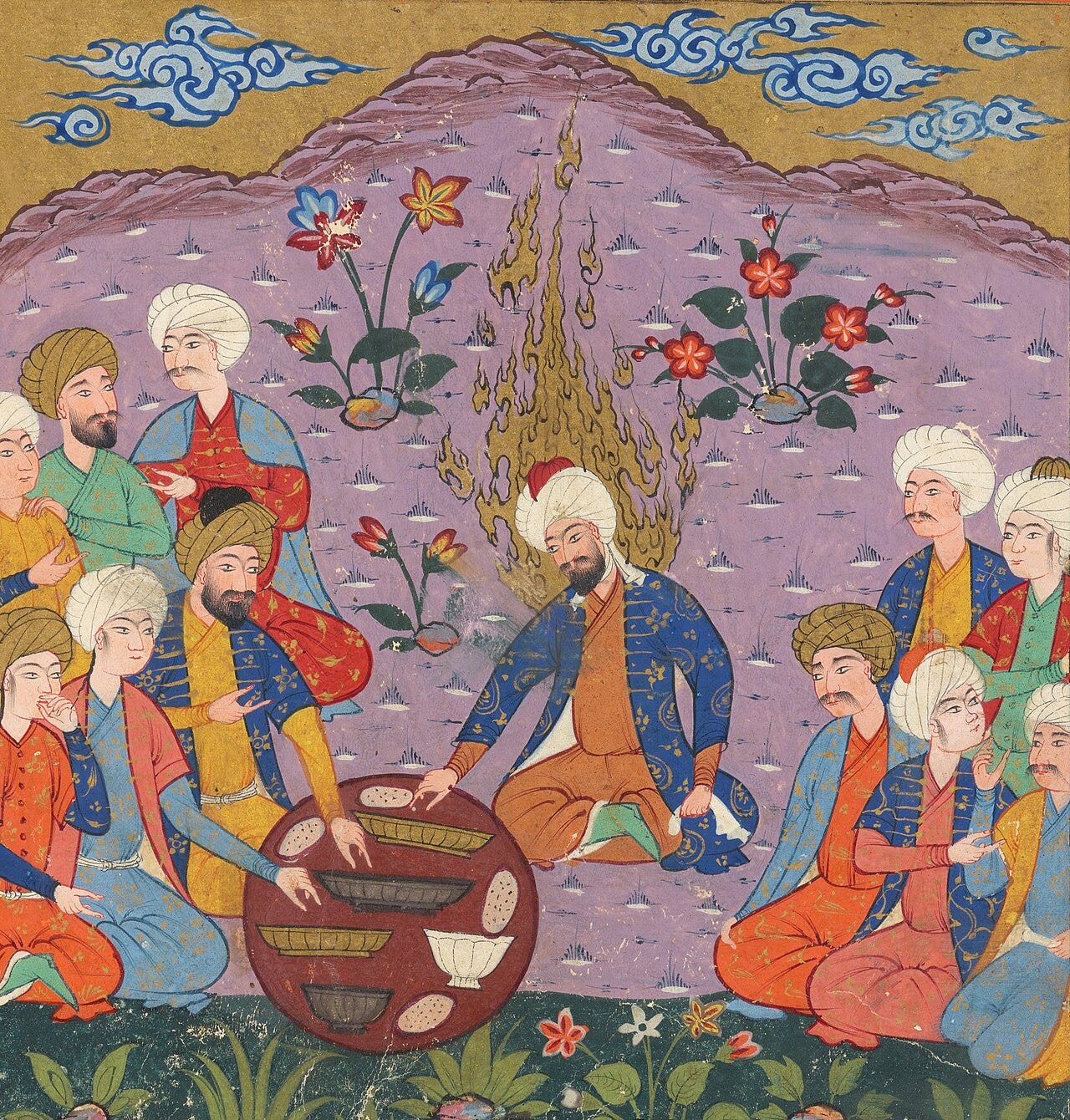
How the Qur’an Describes Jesus (as)
1. Jesus (as) is mentioned by name more often than Prophet Muhammad (sa)
While Muslims revere Prophet Muhammad (sa) as the final law-bearing prophet, the Qur’an references Jesus (as) more frequently. This is no accident. His life, mission, and spiritual authority are highlighted repeatedly as a model of righteousness and divine support. To be a Muslim is to love Jesus Christ (as) more than we love our own parents.
2. The Qur’an affirms the virgin birth of Christ
The Qur’an is the only religious scripture outside the Gospels that attests to the virgin birth of Christ. Surah Maryam (Chapter 19)—named after Mary herself—provides an extended, reverent account of the miraculous birth of Jesus.
The Qur’an affirms that Mary conceived Jesus as a sign from God and without any human father. Mary is honored as one of the most righteous women in history (more about this in a moment).
3. Jesus is described as sinless, divinely strengthened, and the Messiah
The Qur’an refers to Jesus as al-Masih (the Messiah), attests to his sinlessness, and states that he was strengthened with the Holy Spirit. His miracles—including healing the sick, restoring sight to the blind, and raising the dead—are all affirmed as signs granted by God. Though, to be clear, the Islamic view is not that Jesus (as) physically brought someone back to life, but that as the foretold Messiah, he revived the spiritually dead and reconnected the Israelites with God—as was his mission.
4. Jesus was sent specifically to the Tribes of Israel
The Qur’an teaches that Jesus’s mission was a continuation of the prophetic tradition of the Children of Israel, calling them back to the unity of God and the path of righteousness. This is based on Jesus’s (as) own words where he repeatedly states, “I am not sent but unto the lost sheep of the house of Israel.” (Matthew 15:24). In other words, the Qur’an affirms the Old Testament prophecies of the coming of the Messiah are fulfilled in the person of Jesus son of Mary.
5. The Qur’an requires Muslims to accept Jesus as an article of faith
One of Islam’s six Articles of Faith is “belief in all of God’s prophets.” As Jesus (as) was indeed one of God’s chosen prophets, the Islamic faith obliges Muslims to believe in and accept Jesus (as). Thus, Muslims are obligated to honor him as a prophet, messenger, Messiah, and exemplar of spiritual purity. In short, to be Muslim is to believe in Jesus (as).
6. The Qur’an contains an entire chapter named after Mary, mother of Jesus
Surah Maryam is one of the most beautiful and tender chapters in the Qur’an. No other woman in the Qur’an is given a chapter in her name—not even the mothers, wives, or daughters of Prophet Muhammad (sa). This fact alone illustrates the centrality of Mary and Jesus in Islamic thought.
Surah Maryam relates in detail that an angel of God appeared to Mary to give her the glad tidings of a son. It records her disbelief and exasperation that “How can I have a son when no man has touched me?” It relates her immense labor pains, the persecution she faced for giving birth to Jesus (as), the accusations against her moral character, and God’s exoneration of her purity, chastity, and righteousness.
Thus, in the Qur’an Chapter 3 Verse 43 God declares, “And remember when the angels said, ‘O Mary, Allah has chosen thee and purified thee and chosen thee above the women of all peoples.” It should come as no surprise, therefore, that the modest dress Muslim women observe is modeled after Mary Mother of Jesus (as)—as she is the woman God chose “above the women of all peoples.”
The Second Coming: A Theological Divergence Among Muslims
Across the Muslim world, there is broad agreement that Jesus holds an exalted status, is a prophet of God, and that there will be a second coming of the Messiah. However, Muslims differ on the nature of his return.
The contemporary Orthodox Muslim belief today
Many Muslims believe that Jesus physically ascended to heaven and will physically return near the end times to defeat the Antichrist and usher in a final era of justice.
The Ahmadiyya Muslim understanding
As a member of the Ahmadiyya Muslim Community, my belief—rooted in Qur’an, Hadith, and the Gospels—is that:
• Jesus survived the crucifixion,
• migrated east in search of the lost tribes of Israel,
• fulfilled his mission, and
• died a natural death at an old age.
From this perspective, references to the “second coming of Jesus” symbolize the arrival of a reformer who revives Jesus’s spiritual qualities, not the physical return of the same historical person. This is a longer discussion, and I will explore the theological foundations and historical evidence for this view in a future article.
But for our purposes today, the key point is this: Regardless of which interpretation one follows, all Muslims affirm the profound spiritual stature of Jesus as a true and beloved prophet of God.
A Bridge Between Faiths
The Qur’an’s reverence for Jesus and Mary offers one of the greatest opportunities for interfaith appreciation between Muslims and Christians. In an age when well-funded misconceptions fuel division, the actual texts of our traditions tell a different story—one of overlapping reverence, shared prophetic history, and moral kinship.
Muslims love Jesus.
Muslims honor Jesus.
Muslims believe in Jesus.
Indeed, Prophet Muhammad (sa) referred to Jesus Christ (as) as “his brother.”
And although our theological frameworks differ, the ethical message Jesus preached—mercy, justice, compassion, humility—is a message that resonates deeply with both our communities.
As Christians gather with loved ones to celebrate this holiday season, I hope this exploration helps illuminate just how much we hold in common. May it inspire deeper dialogue, mutual respect, and a renewed recognition of the sacred humanity we all share.
We have more in common than many think.
I am an atheist, but was born and raised Catholic. I received my formal education in a convent, from Catholic nuns.
We were told Muslims recognize Jesus, but that was all.
Thank you so much for posting this article. History... history is such a teacher. We really need to listen a whole lot more. 💖
Thank you, for reminding folks that loving Jesus is not a Christian monopoly.